
6 Creative Ad Tips for E-Commerce Success Without Skills

Standing out on crowded social platforms is tough when your ads easily blend in and get scrolled past. Creating engaging ad content often feels overwhelming, especially if you lack design experience or access to a full creative team. The right tools and strategies can transform your marketing efforts and make your ads not only catch attention but also drive results. This list reveals actionable insights tested in real research, from instant AI ad creation to trending elements that boost consumer engagement. Get ready to discover practical techniques that will help your brand create ads people actually notice, remember, and respond to.
Table of Contents
- Leverage AI Tools for Instant Ad Creation
- Use Trending Elements to Capture Attention
- Personalize Ads with Brand Identity
- Focus on Mobile-Friendly Design
- Optimize Visuals for High Impact
- Test and Refine for Best Results
Quick Summary
| Takeaway | Explanation |
|---|---|
| 1. Use AI for Fast Ad Creation | AI tools generate compelling ads quickly, saving time and resources, especially for non-designers. |
| 2. Incorporate Trending Elements | Utilizing current trends boosts engagement by making ads feel fresh and relevant, increasing recognition and interaction. |
| 3. Personalize Ads to Reflect Brand Identity | Ads that consistently showcase your unique brand elements foster stronger connections and loyalty from consumers. |
| 4. Ensure Mobile-Optimized Design | As over 60% of traffic is from mobile, ads must be designed for mobile viewing to prevent losing audience engagement. |
| 5. Continuously Test and Refine Ads | Implement ongoing testing using performance data to optimize ad effectiveness and enhance results over time. |
1. Leverage AI Tools for Instant Ad Creation
AI-powered tools now handle the creative heavy lifting that once required design expertise. These platforms analyze consumer behavior and market trends to generate targeted ad copy and visuals in seconds.
Traditional ad creation demands time, resources, and specialized skills. Most small business owners juggle multiple roles without graphic design experience. That's where AI tools for instant generation of ad content make a real difference.
Here's how modern AI advertising works:
- Analyzes vast amounts of consumer data to identify what resonates with your audience
- Generates multiple ad variations based on your brand identity and proven winning strategies
- Adjusts messaging and visuals in real-time based on performance metrics
- Creates compliant ads across different platforms without manual adjustments
Research shows that AI aids in efficient ad content generation by tailoring ads instantly to match consumer behavior. This means higher relevance and greater impact—without needing a design degree.
The real advantage? Speed meets quality. You go from concept to launch-ready ads in minutes rather than days or weeks.
AI-powered platforms let non-experts produce effective ad creatives by automating the entire design and copywriting process.
When you use tools like Palmador's AI-driven approach, the platform handles:
- Brand alignment automatically
- Trend-based design recommendations
- A/B testing variations instantly
- Performance optimization suggestions
You simply provide your product information, brand colors, and target audience. The AI does the rest. No Photoshop skills required.
Many marketing managers worry their ads will look generic or unprofessional. That's not the case. Modern AI tools learn from high-performing advertisements and apply those winning patterns to your specific industry and product.
The time savings alone justify the investment. Your team spends less time creating and more time analyzing performance and strategy.
Pro tip: Start with AI-generated ad variations, then use performance data to identify which elements resonate most with your audience, allowing you to refine your brand voice over time.
2. Use Trending Elements to Capture Attention
Trending sounds, filters, and formats grab attention faster than generic ads. When you incorporate what's popular right now, your ads feel fresh and relevant to your audience.
Consumers scroll past hundreds of ads daily. What stops them? Content that feels current and authentic. Trending content elements significantly boost consumer engagement across platforms like TikTok and Instagram Reels.
Why does this work? Your brain naturally responds to familiar patterns and sounds. When you hear a trending audio clip or see a popular filter, it triggers recognition. This increases attention and memory in seconds.
Here's what makes trending elements powerful:
- Trending sounds create instant emotional connections with your audience
- Popular visual filters make your ads feel native to the platform
- Current formats match user expectations and platform algorithms
- Familiar formats reduce cognitive load, making your message easier to process
The key is timing. Trends move fast. What's hot today becomes dated within weeks. You need to identify trending elements that align with your product category.
Research shows trending visual and auditory cues enhance memory and reward processing, making audiences more likely to remember your brand.
Practical implementation starts with observation. Spend 15 minutes daily scrolling your target platforms. Notice which sounds, effects, and video styles appear repeatedly. These are your trending elements.
Then ask yourself: Does this trend fit my brand? A fitness brand uses trending workout sounds. A fashion retailer incorporates trending color palettes and transitions. Don't force trends that feel out of place.
When you create ads with trending elements, test them immediately. Video marketing types for social brands evolve constantly, so monitor which formats perform best with your audience.
The advantage of using AI tools like Palmador is that platforms analyze current trends automatically. You get recommendations for trending sounds and formats built into your ad creation process. No need to manually hunt for what's popular.
One warning: Overusing trends can backfire. Balance trending elements with your core brand identity. Audiences spot inauthenticity instantly.
Pro tip: Monitor trending elements for one week before using them in ads, ensuring they truly resonate with your target audience rather than chasing every fleeting trend.
3. Personalize Ads with Brand Identity
Generic ads blend into the background. Personalized ads that reflect your brand stand out and stick with customers. When your ads feel authentic to who you are, people notice and remember.
Your brand identity is more than a logo. It includes your color palette, tone of voice, values, and visual style. Weaving these elements into every ad creates consistent brand recognition.
Here's why this matters. Personalized advertising with brand-specific identity elements enhances consumer engagement across emotional, cognitive, and behavioral dimensions. Customers don't just see your ad—they connect with your brand.
Generic ads perform average. Branded ads outperform by fostering stronger loyalty and perceived value. That's the difference between getting clicks and building customers.
Start by auditing your brand identity:
- Your primary and accent colors
- Your brand voice (playful, professional, friendly, minimalist)
- Your visual style (modern, classic, artistic, clean)
- Your core values and mission
- The way your best customers describe you
Once you identify these elements, apply them consistently across every ad. Use your brand colors in backgrounds and text. Match your tone in copywriting. Choose fonts that reflect your personality.
AI tools like Palmador make this seamless. You input your brand identity once, and the platform automatically applies it to every ad variant it generates. No guesswork. No inconsistency.
Ads that integrate your unique brand identity create stronger attachments with customers and drive measurable loyalty improvements.
Consider a boutique coffee roaster. Their brand identity might include earthy tones, handcrafted imagery, and conversational copy about coffee origins. When their ads reflect this personality instead of using generic stock photos and corporate language, they stand out.
Or think about a tech startup. Their brand might be bold, minimalist, and forward-thinking. Ads featuring clean lines, tech-inspired visuals, and direct language reinforce who they are.
Understanding how AI improves marketing ROI shows why personalization matters. Personalized branded ads don't just increase engagement—they improve your return on ad spend by reinforcing recognition and trust.
Consistency builds familiarity. Familiarity builds trust. Trust builds customers.
Pro tip: Create a simple brand identity checklist with your top 5 visual and tonal elements, then reference it when reviewing any ad before launch to ensure consistency.
4. Focus on Mobile-Friendly Design
Over 60 percent of online traffic comes from mobile devices. If your ads don't work on phones, you're losing most of your audience. Mobile-friendly design isn't optional anymore—it's essential.
When someone sees your ad on their phone, every element matters. Text needs to be readable without zooming. Images must load quickly. Buttons should be easy to tap with a thumb. These details determine whether someone engages or scrolls past.
Mobile-friendly design elements like optimized ad spaces enhance engagement in apps and mobile browsers. Speed matters too. Slow-loading ads frustrate users and tank your performance metrics.
Here's what mobile optimization includes:
- Large, easily tappable buttons and clickable areas
- Text sized for phone screens without requiring zooming
- Fast load times under 3 seconds
- Vertical layouts that match phone screen dimensions
- Images optimized for smaller displays
- Minimal scrolling to reach your call-to-action
Think about your own phone habits. You skip ads that are hard to read. You tap buttons that feel spacious. You abandon slow-loading pages. Your customers do the same.
Mobile marketing transforms consumer engagement through personalized experiences optimized for smartphones. When your ads work seamlessly on mobile, you boost conversion rates significantly.
Mobile-optimized ads load faster, look better, and convert more effectively on the devices where most consumers spend their time.
Practical implementation starts with testing. View your ads on actual phones, not just desktop screens. Use different devices—iPhones, Android phones, various screen sizes. Notice where text breaks awkwardly or images look blurry.
AI platforms like Palmador automatically generate mobile-optimized ads. The system adjusts text sizes, button spacing, and image dimensions to work perfectly on phones. You don't need technical skills.
Common mobile mistakes to avoid include cramming too much information into one screen, using tiny fonts, and placing buttons where thumbs naturally rest incorrectly.
Test your ads on slow connections too. Many users browse on 4G or inconsistent networks. Ads that load slowly lose engagement regardless of design quality.
Pro tip: Always preview your ads on at least two different mobile phones before launching to catch design issues that desktop previews miss.
5. Optimize Visuals for High Impact
A striking image stops the scroll. A dull one gets ignored. Visual optimization is what separates ads that convert from ads that disappear into the feed.
Your visuals are the first thing people notice. Before they read your copy, they react to colors, composition, and imagery. Getting this right means everything.
AI technologies analyze and optimize visual components for greater engagement by tracking emotional responses to ad elements. Modern AI can identify which visual choices trigger attention and emotional connection in viewers.
This doesn't require design experience. It requires understanding what works. Here's what impacts visual performance:
- Color contrast and psychology (warm colors draw attention, cool colors suggest trust)
- Image composition and focal points (where does the eye naturally land)
- Text overlay visibility (white space and readability matter)
- Product presentation (clarity and visual appeal of your main offer)
- Consistency with brand colors and style
Computer vision models extract patterns that influence consumer engagement through detailed image analysis. This technology helps identify which colors, shapes, and symbols resonate most with your target audience.
Practical optimization starts simple. Avoid cluttered backgrounds. Use contrasting colors so your product pops. Include real product photos instead of generic stock images when possible.
Optimized visuals don't just look better—they trigger emotional responses that drive engagement and conversion rates.
Consider these high-impact visual choices:
- Use bright, saturated colors for attention-grabbing categories like fashion and food
- Choose muted, professional tones for finance and B2B products
- Include faces or expressions that match your target emotion
- Ensure your product is the obvious focal point
- Test different compositions to see what your audience responds to
AI ad creation tools analyze thousands of successful ads to understand what visual elements perform best. When you use platforms like Palmador, the system recommends optimal color palettes, composition styles, and imagery based on your industry and product type.
You also get instant visual variations. Test one design against multiple visual alternatives to see which resonates. Data tells you what works.
Weak visuals waste ad spend. Strong visuals multiply your results. The difference matters significantly.
Pro tip: Create three variations of your ad with different visual styles (vibrant vs. minimalist vs. lifestyle), then run them simultaneously to see which visual approach your audience prefers.
6. Test and Refine for Best Results
The best ads aren't created once and forgotten. They're tested, measured, and refined continuously. This iterative approach separates successful campaigns from mediocre ones.
You have an advantage most marketers miss. Modern platforms give you real-time performance data. Use it. Track what works, then do more of it.
Traditional A/B testing has hidden flaws. Platform algorithms target different audience segments, which can skew your results and make comparisons unreliable. Understanding this limitation helps you test more strategically.
Emerging advertising testing platforms integrate AI and video analytics for faster, deeper insights. These tools enable rapid refinement rather than lengthy traditional testing cycles.
Start by identifying what to measure:
- Click-through rates (who engages with your ad)
- Conversion rates (who actually buys)
- Cost per acquisition (how much each customer costs)
- Return on ad spend (profit generated per dollar spent)
- Engagement time (how long viewers watch)
Next, test one element at a time. Change your headline while keeping visuals constant. Adjust your image while maintaining copy. This isolation reveals what actually drives performance.
Smart testing requires measuring the right metrics and accounting for platform differences to identify true performance drivers.
Refinement isn't complicated. Look at your data weekly. Notice patterns. If one headline generates 40 percent more clicks, use variations of that approach. If a specific color performs better, use it in future ads.
Valid effectiveness assessments require refined methodologies accounting for audience variability across platforms. Don't rely on single tests. Run multiple variations simultaneously to gather comprehensive data.
AI-powered platforms handle this automatically. They generate multiple ad variations, run them in real-time, and show you which performs best. You see results in days instead of weeks.
Common testing mistakes include changing too many variables at once, stopping tests too early, and ignoring seasonal patterns. Patience and precision matter.
Document everything. Keep records of what you tested and results. This knowledge compounds. After three months of testing, you understand your audience deeply.
Pro tip: Always test at least three variations of any new ad element simultaneously, then scale spending toward the top performers while continuously introducing new test variations to prevent creative fatigue.
Below is a comprehensive table summarizing strategies, implementations, and benefits of creating impactful advertising campaigns according to the article.
| Strategy | Implementation | Benefits |
|---|---|---|
| Leverage AI Tools for Ad Creation | Utilize platforms analyzing consumer data to generate optimized ad copies and visuals. | Save time, ensure compliance, and attain quality ads aligned with trends. |
| Incorporate Trending Elements | Monitor platforms for popular formats, sounds, and effects to integrate into ads. | Enhance engagement and make ads feel current and relatable. |
| Personalize Ads with Brand Identity | Identify and apply brand-specific elements consistently across campaigns. | Build trust, improve loyalty, and strengthen customer connections. |
| Focus on Mobile-Friendly Design | Ensure ads are readable, speedy, and navigable on mobile devices. | Reach and retain the majority of the audience through seamless mobile experiences. |
| Optimize Visuals for High Impact | Use contrasting colors, clear focal points, and engaging imagery. | Captivate attention immediately and increase conversion rates. |
| Test and Refine Continuously | Conduct systematic testing of elements informed by real-time analytics. | Optimize performance, minimize costs, and enhance return on investment. |
Accelerate Your E-Commerce Success With AI-Driven Ad Creation
Many e-commerce businesses struggle with creating impactful ads without specialized skills or wasting time on design. This article highlights key challenges such as leveraging AI tools for instant ad content, incorporating trending elements, maintaining brand identity, and ensuring mobile-friendly design. If these goals resonate with you, it means you are ready to stop juggling complicated ad creation and start focusing on strategy and growth.
Palmador.ai offers a powerful solution to these pain points by automating digital ad generation using artificial intelligence. The platform quickly produces ads tailored to your brand identity and current trends while optimizing for mobile and visual impact. This allows you to craft professional ads without prior design experience and continuously refine them based on real-time data. Experience the benefits: save time, improve your advertising return on investment, and boost your brand's visibility all from one easy-to-use platform.
Discover more about how AI can revolutionize your marketing at Palmador.ai and explore our AI-driven ad strategy guide. If you want to master video marketing types for social brands, see our dedicated insights at Essential Video Marketing Types for Social Brands.
Ready to transform your e-commerce advertising with ease and speed?
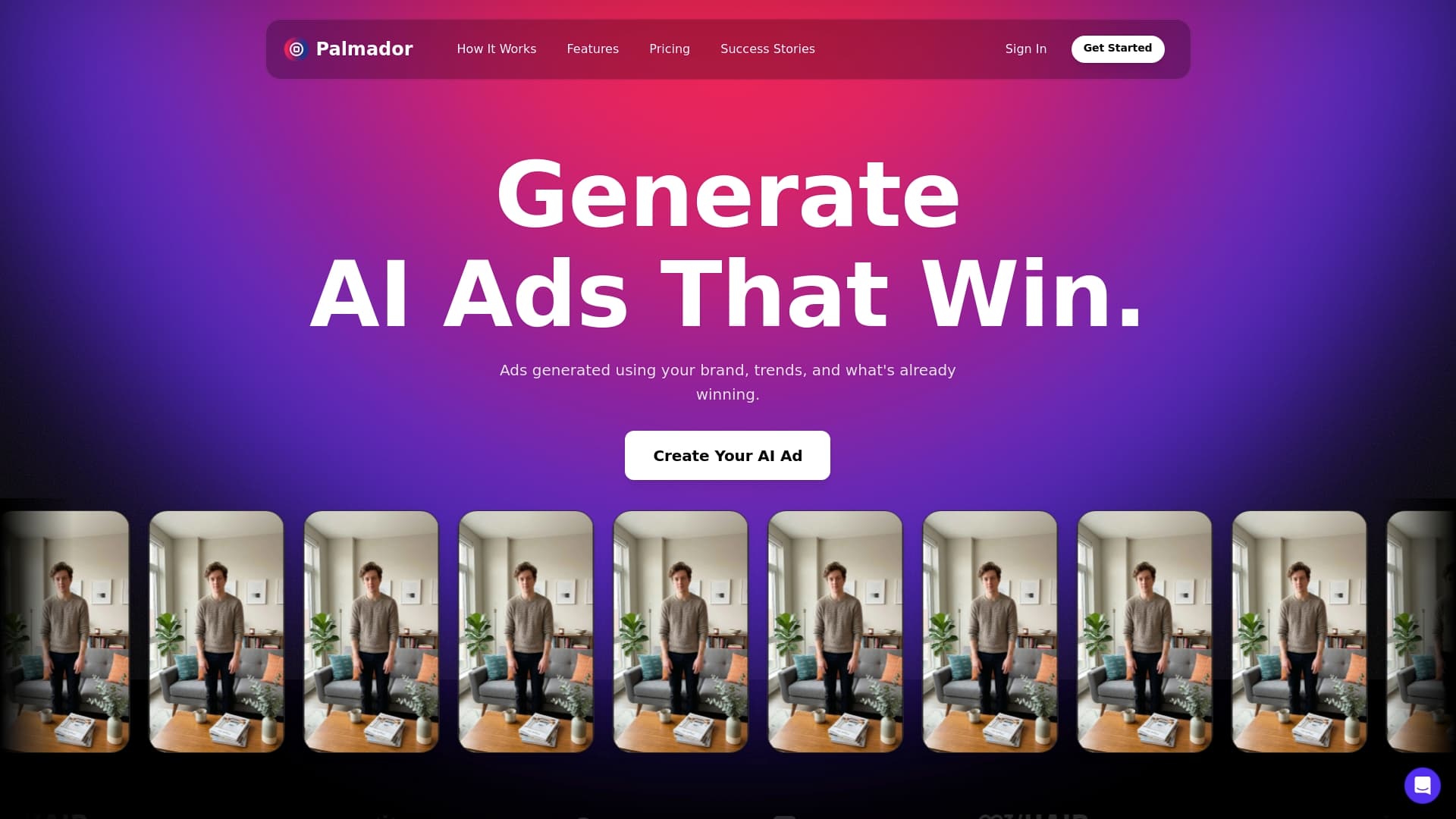
Start creating high-performing ads today with Palmador.ai and see measurable results without needing advanced skills or wasting time on trial and error.
Frequently Asked Questions
How can I use AI tools to create ads without design skills?
You can use AI tools to automatically generate ad copy and visuals tailored to your brand and audience. Simply input your product information and brand identity, and the AI will create ready-to-launch ads in minutes.
What are some trending elements I should incorporate into my ads?
Incorporate sounds, filters, and formats that are currently popular on platforms like TikTok and Instagram. Spend a few minutes daily observing these platforms to identify elements that resonate with your target audience.
How should I ensure my ads reflect my brand identity?
To create personalized ads, closely analyze your brand's color palette, tone of voice, and visual style. Develop a checklist of your top brand elements and ensure they appear consistently in every ad.
Why is mobile-friendly design important for my ads?
More than 60% of online traffic comes from mobile devices, making mobile-friendly design essential. Optimize your ads by using large buttons, readable text, and format layouts that suit smaller screens to improve user engagement.
How can I test and refine my ads for better performance?
Establish a regular testing schedule to evaluate key metrics like click-through rates and conversion rates. Test one element at a time for clearer insights, adjust based on your findings, and document results to track improvement trends over time.
Recommended
- AI-Driven Ad Strategy Guide for High-Impact Results - Palmador Blog
- 7 Essential Video Marketing Types for Social Brands - Palmador Blog
- Palmador - Generate AI Ads That Win
- Palmador - Generate AI Ads That Win
- Boost E-Commerce Sales with Cross Selling Strategies - seo analytic
- E-Commerce SEO - 1on1 SEO